
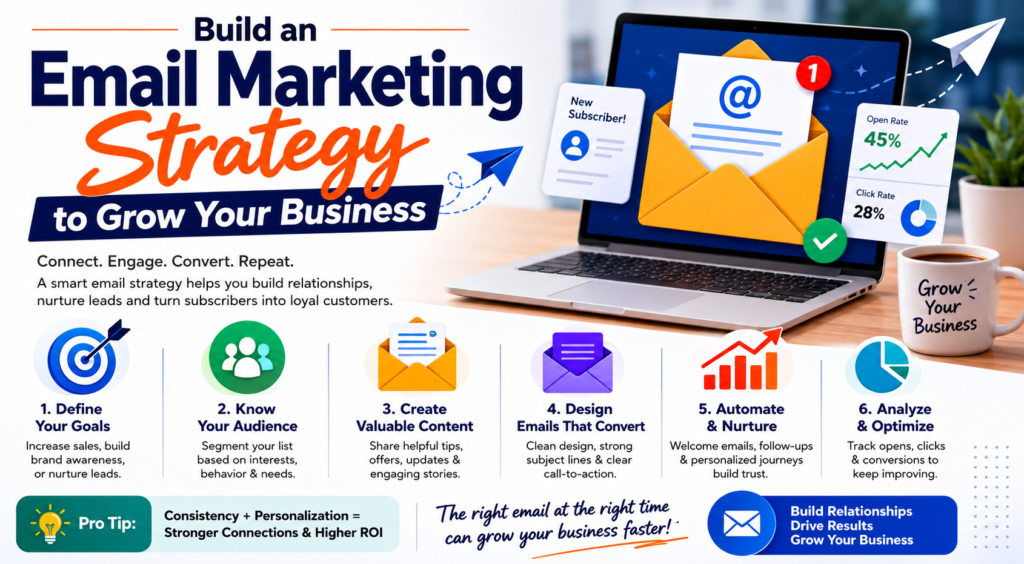
In today’s digital world, businesses have countless ways to connect with potential customers. However, email marketing remains one of the most effective and cost-efficient methods for building relationships, generating leads, and increasing sales. A well-planned email marketing strategy helps businesses stay connected with their audience while delivering valuable information directly to their inbox.
Why Email Marketing Matters
Unlike social media platforms, where algorithms control visibility, email gives businesses direct access to their audience. When someone subscribes to your email list, they have already shown interest in your products or services. This creates an opportunity to nurture leads, build trust, and guide customers through their buying journey.
Studies consistently show that email marketing delivers one of the highest returns on investment (ROI) among digital marketing channels. Whether you’re a small business or a large company, email marketing can help drive traffic, boost conversions, and improve customer retention.
Build a Quality Email List
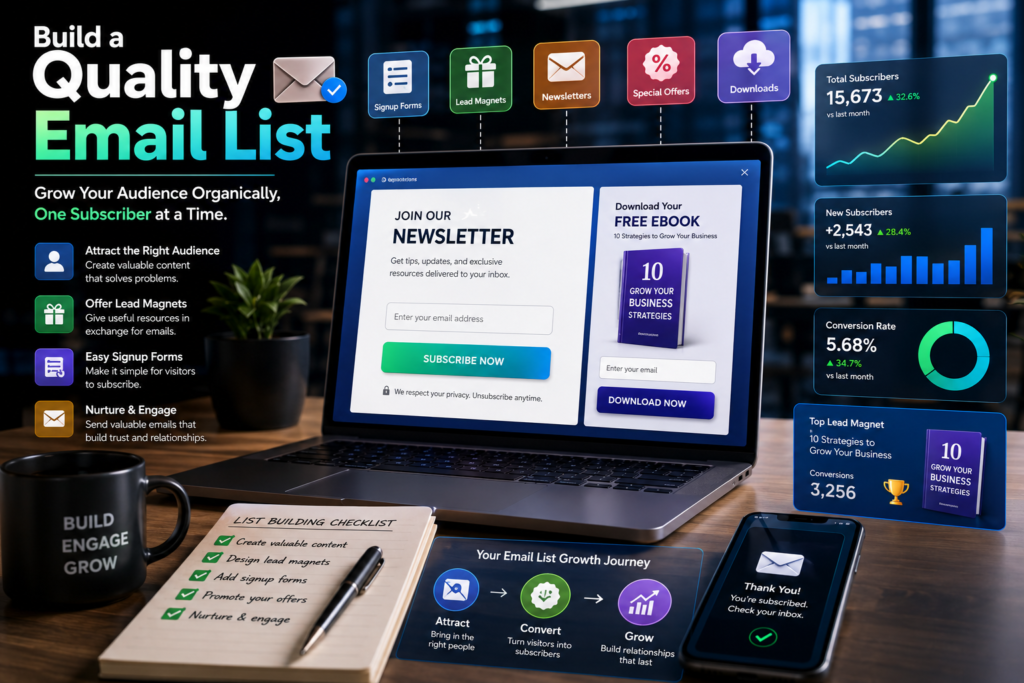
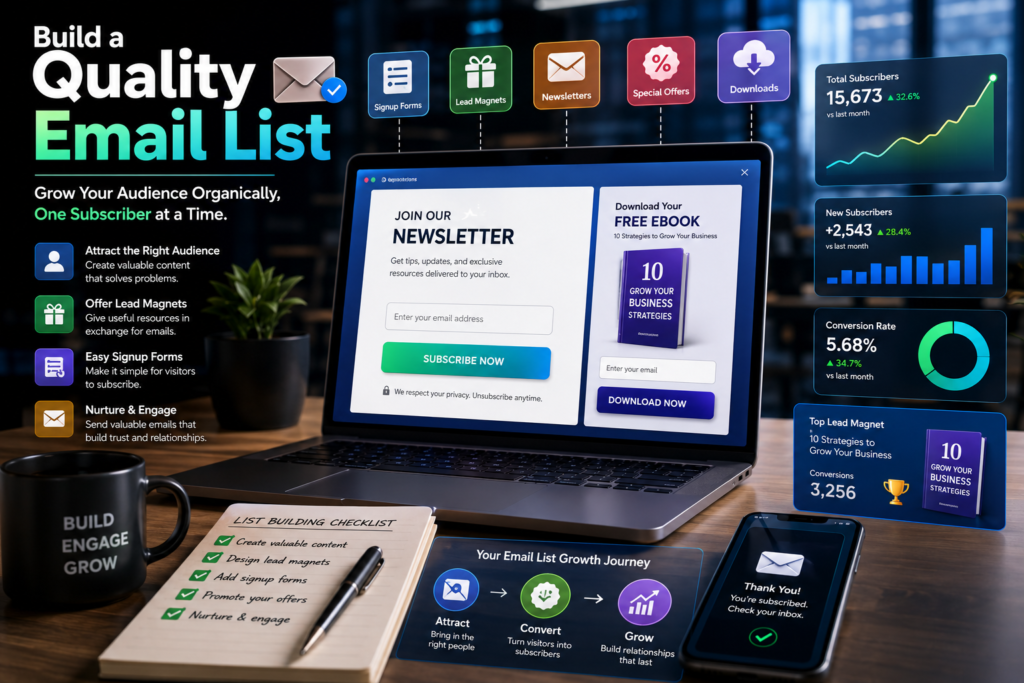
The foundation of a successful email marketing strategy is a strong email list. Instead of purchasing email lists, focus on growing your audience organically. Encourage website visitors to subscribe through signup forms, lead magnets, newsletters, special offers, or downloadable resources.
Offering valuable content in exchange for an email address can significantly increase subscriptions. The more relevant your offer is to your target audience, the more likely people are to join your list.
Segment Your Audience

Not all subscribers have the same interests or needs. Audience segmentation allows you to send personalized emails based on factors such as customer behavior, demographics, purchase history, or interests.
For example, a customer who recently purchased a product may receive follow-up emails with usage tips, while a new subscriber may receive a welcome email sequence. Personalized emails often achieve higher open rates, engagement, and conversions compared to generic messages.
Create Valuable Content
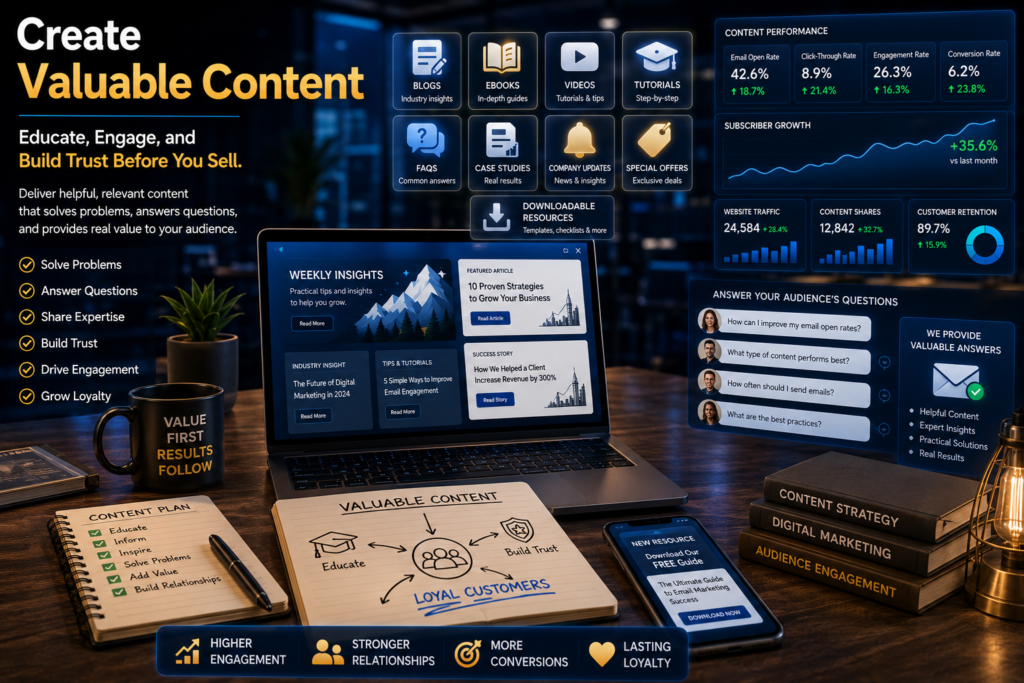
The success of email marketing depends heavily on the value you provide. Instead of constantly promoting products or services, focus on delivering helpful content that solves problems and answers questions.
You can share industry insights, educational articles, special offers, company updates, success stories, and useful resources. When subscribers consistently receive value from your emails, they are more likely to engage with your brand and remain loyal customers.
Automate Your Email Campaigns
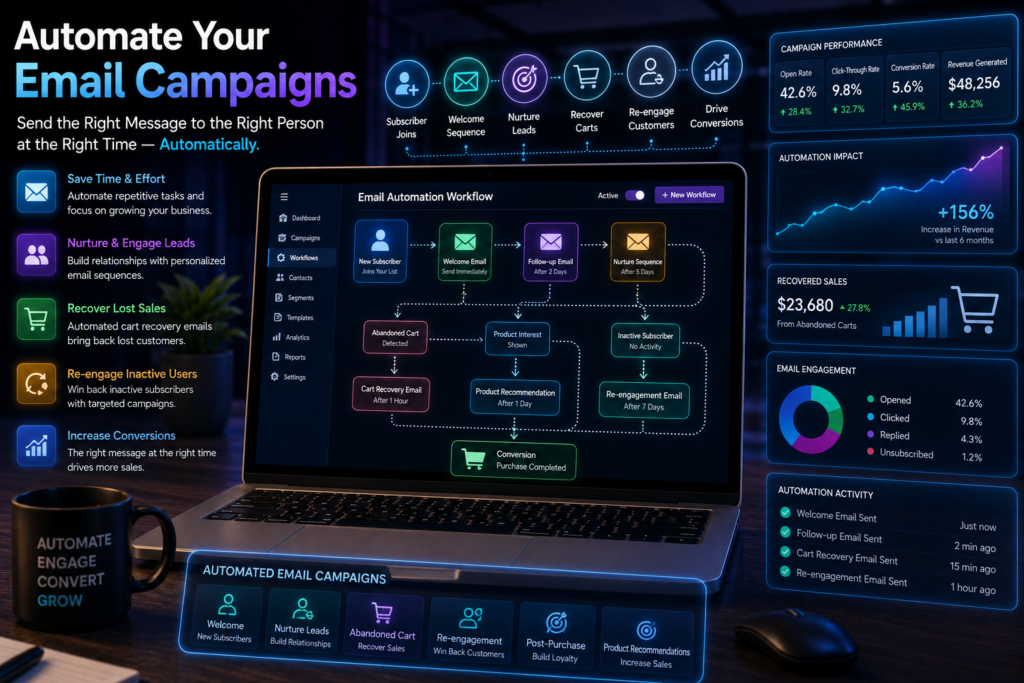
Marketing automation helps businesses save time while maintaining consistent communication. Automated email sequences can welcome new subscribers, nurture leads, recover abandoned carts, and re-engage inactive customers.
Automation ensures that the right message reaches the right person at the right time. This improves customer experience and increases the likelihood of conversions without requiring constant manual effort.
Monitor Performance and Optimize

An effective email marketing strategy requires continuous improvement. Regularly track key performance indicators such as open rates, click-through rates, conversion rates, and unsubscribe rates.
Analyzing these metrics helps identify what is working and where improvements are needed. Testing different subject lines, email designs, content formats, and call-to-action buttons can help maximize results over time.
Conclusion
Email marketing remains one of the most powerful tools for business growth. By building a quality email list, segmenting your audience, creating valuable content, automating campaigns, and monitoring performance, businesses can develop a strategy that strengthens customer relationships and drives long-term success.
A well-executed email marketing strategy not only increases sales but also helps create lasting connections with customers, making it an essential part of any modern digital marketing plan.